When choosing leadership training, costs vary significantly between independent consultants and training companies. Independent consultants typically charge lower rates, with day rates ranging from £500 to £1,000, while training companies charge £1,200 to £3,000 per day. These differences reflect the scale, resources, and infrastructure offered by training companies, which may suit larger or more complex training needs.
For short workshops or smaller-scale programmes, independent consultants often provide cost-effective options. Training companies, however, bring added support, branded methodologies, and consistency for larger initiatives. Additional costs such as travel, materials, and certification fees can also impact budgets, so understanding the full breakdown is crucial.
This article outlines key cost comparisons, examples of project pricing, and factors influencing rates to help you make informed decisions. Use this information to compare providers and identify the best fit for your organisation’s needs.
What Independent Consultants Charge
As of January 2026, the median daily rate for training consultants in the UK stands at £663, marking a 65.63% rise compared to the previous year. This figure surpasses the median rates for general consultants (£550) and contract IT roles (£500).
Day Rates for Independent Consultants
Several factors determine where a consultant's rate falls within the pricing range. Experience and specialisation play a significant role; consultants with over a decade of leadership experience or those employing specialised tools, like Harrison assessments, typically charge at the higher end of the scale. Location also matters - assignments in London often come with a 4.5% premium, with rates averaging £575 compared to £550 in other parts of the UK.
The target audience for training influences pricing too. Programmes aimed at senior managers and executives command higher fees than those designed for junior or mid-level employees. Additionally, the type of client impacts rates. Private-sector organisations, especially in technology and finance, generally have larger budgets than not-for-profits or government bodies.
Sharon Gaskin, Founder of The Trainers Training Company, notes, "The price of a training workshop reflects not just delivery hours but the expertise and reputation behind it".
These day rates are just one part of the equation when calculating the total cost of a project.
Project Cost Examples
When considering project costs, it’s important to factor in preparation and follow-up time alongside delivery. Day rates alone don’t reflect the full scope of work. For example, delivering a six-hour workshop can require up to 28 hours of work, including client research, content creation, rehearsal, travel, delivery, and follow-up documentation.
In November 2023, consultant Susanna Rantanen tracked her time for a six-hour workshop and found that with 28 hours of work at £75 per hour, the project cost came to £2,100. For a 12-person workshop, this equates to approximately £175 per participant.
What Training Companies Charge
Training companies generally charge more than independent consultants, with day rates ranging from £500 to over £1,200. Elite brands and business schools often exceed £1,500 per day. These higher fees reflect the added infrastructure and resources associated with a recognised brand, such as office overheads, administrative teams, marketing efforts, and professional accreditations.
Day Rates for Training Companies
Established providers and prestigious institutions often charge over £1,500 per day, driven by their strong reputation and proven results. Their services often include larger pools of facilitators, standardised training materials, and proprietary content that can accommodate larger groups and provide reliable backup.
Location also plays a role in pricing. Training sessions held in London or other major cities often come with a 15% to 30% premium due to higher venue costs and greater demand in these areas. Additionally, industry-specific programmes can influence prices. For example, courses tailored for sectors like Financial Services or Engineering are typically more expensive than those designed for Health and Social Care professionals.
Sharon Gaskin, Founder of The Trainers Training Company, explains: "When a client books you as a trainer, they're not just paying for the hours you're working with them but also for the knowledge, skills and experience you bring with you."
These day rates provide the foundation for a variety of project pricing models.
Project Cost Examples
For a one-day workshop, training companies typically charge between £300 and £800 per person for public courses. For in-house delivery, corporate rates range from £2,000 to £5,000 or more per trainer-day. A tailored in-house programme for 30 participants might cost around £30,000, equating to roughly £1,000 per person. In contrast, open programmes can exceed £3,000 per participant.
Multi-day courses, lasting between 3 and 10 days, are priced from £2,000 to £8,000 per person. Executive-level programmes often cost significantly more, ranging from £15,000 to £50,000 per participant. Custom in-house projects can vary widely, from £10,000 to over £100,000, depending on the complexity and duration of the programme.
These headline figures do not include additional costs such as travel, accommodation, or lost productivity. For instance, a £5,000 course could result in a total expenditure of approximately £9,000 when these factors are taken into account.
Side-by-Side Cost Comparison
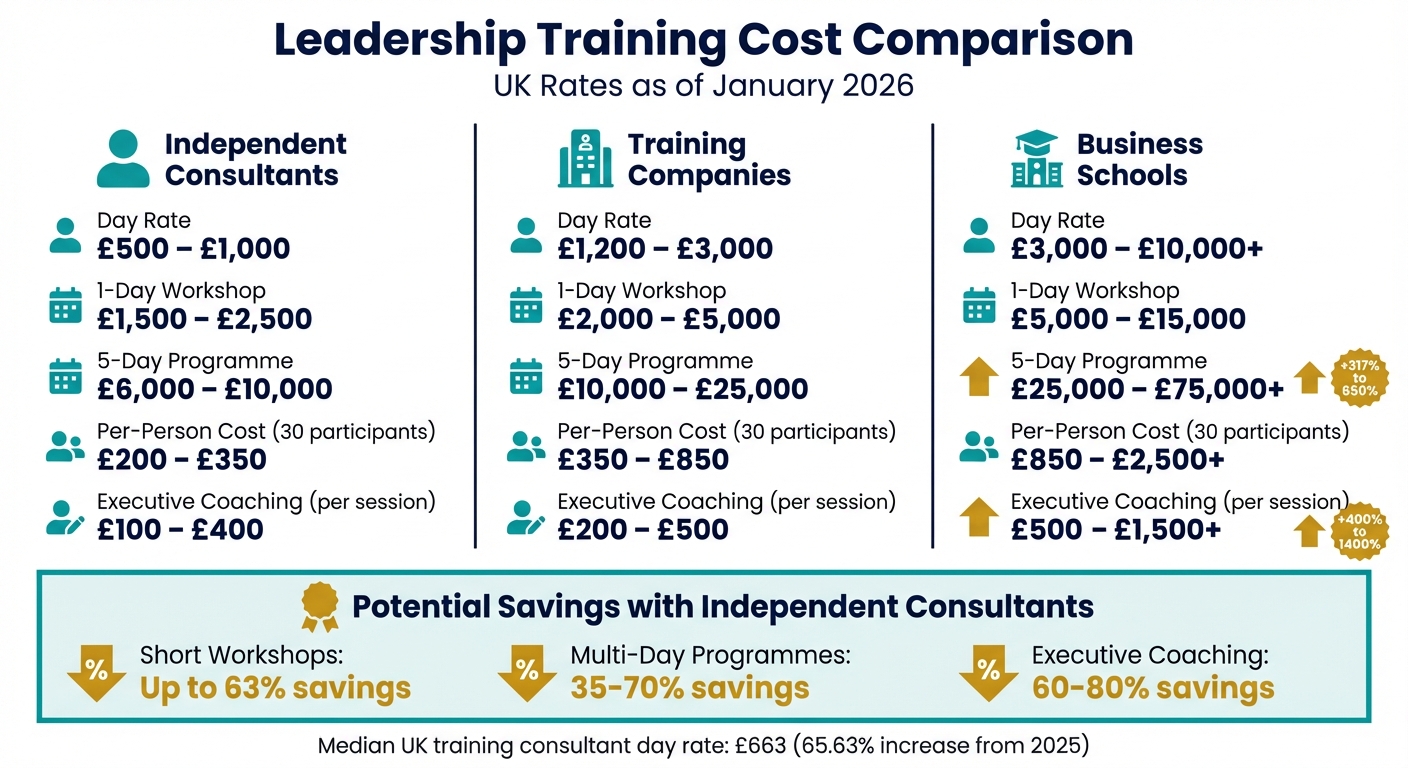
Leadership Training Cost Comparison: Independent Consultants vs Training Companies vs Business Schools
When comparing costs across different provider types, independent consultants tend to charge significantly less than training companies for leadership training. For instance, independent consultants typically charge between £500 and £1,000 per day, whereas training companies range from £1,200 to £3,000 per day. Business schools, often positioned at the higher end of the spectrum, may charge £10,000 or more per day.
The cost gap becomes even more pronounced for full programmes. A one-day workshop delivered by an independent consultant usually costs between £1,500 and £2,500, compared to £2,000 to £5,000 from training companies. For a five-day programme, independent consultants typically charge £6,000 to £10,000, while training companies charge between £10,000 and £25,000. The table below provides a quick comparison of these costs.
Cost Comparison Table
| Provider Type | Typical Day Rate | 1-Day Workshop | 5-Day Programme | Per-Person Cost (30 participants, in-house) |
|---|---|---|---|---|
| Independent Consultant | £500 – £1,000 | £1,500 – £2,500 | £6,000 – £10,000 | Approx. £200 – £350 |
| Training Company | £1,200 – £3,000 | £2,000 – £5,000 | £10,000 – £25,000 | Approx. £350 – £850 |
| Business School | £3,000 – £10,000+ | £5,000 – £15,000 | £25,000 – £75,000+ | Approx. £850 – £2,500+ |
For in-house programmes with 30 participants, the cost per person tends to decrease significantly. Independent consultants offer the most cost-effective option, with prices ranging from approximately £200 to £350 per participant. In comparison, training companies charge between £350 and £850 per participant.
Executive coaching adds another layer to cost comparisons, as it is typically priced per session. Rates vary based on the coach’s experience and specialisation. Junior coaches charge between £100 and £200 per session, while experienced practitioners range from £200 to £400. For board-level specialists, fees can reach £500 to £1,500 or more per session. These rates apply regardless of whether the coach operates independently or through a training company.
Additional Costs Beyond Day Rates
When planning leadership training, day rates and programme fees only tell part of the story. A programme priced at £5,000 can require a total budget closer to £9,000 once additional costs are factored in. The structure and allocation of these expenses often vary between independent consultants and training companies.
Below is an overview of typical add-on costs and how they can impact overall budgets.
Common Add-On Costs
Travel and accommodation can significantly increase costs for in-person training. Return travel typically costs around £300, while accommodation for four nights may add another £600. In-person programmes are generally 15–30% more expensive than virtual options because of higher costs for travel, venues, and materials. Programmes held in major cities like London often come with even steeper expenses due to premium venue and logistical charges, which are passed on to clients.
Materials and certification fees can vary widely. These may include items such as printed workbooks, software licences, study guides, or exam vouchers. Certification-based training often adds £500 to £1,000+ per participant. Training companies tend to bundle these fees into their packages, whereas independent consultants might charge for them separately or expect clients to handle materials like printing themselves.
Internal resource time is a significant hidden cost. This includes the value of participants’ time away from work, often estimated at £500 per day for mid-to-senior-level employees, as well as preparation time, which can cost around £400 for eight hours of pre-work. Additionally, organisations must account for the expense of covering employees’ roles during their absence. For a five-day programme, this could amount to £2,500 in lost productivity per participant before considering other expenses.
How Add-Ons Affect Total Budgets
These additional expenses can substantially change the overall cost, depending on the type of provider. Independent consultants often offer lower day rates, but clients may need to take on responsibilities such as arranging venues, printing materials, and managing logistics. This increases internal resource costs and administrative workload. In contrast, training companies typically include venue hire, materials, and logistical support in their higher base fees, which reduces the client’s administrative burden but raises upfront costs.
The total investment for leadership training includes the course fee, travel, accommodation, meals, time away from work, and preparation time. To avoid surprises, organisations should request a detailed cost breakdown and account for any separately charged items when budgeting.
sbb-itb-fa39ac2
Cost Savings by Type of Engagement
Choosing independent consultants can lead to cost reductions of up to 63% for short workshops and offer notable savings on longer programmes and executive coaching. The level of savings often depends on the type of engagement, with shorter projects typically yielding the highest percentage reductions. However, multi-day programmes and ongoing coaching arrangements also present opportunities to cut costs without sacrificing quality.
Savings on Short Workshops
Independent consultants can reduce the cost of short workshops by as much as 63%. For example, a training company may charge £10,000 or more for a custom in-house workshop. In contrast, an independent consultant could deliver similar content for around £2,100. This represents savings of 48–63% for organisations seeking tailored training without the additional overheads associated with larger providers.
These savings on workshops can pave the way for even greater reductions on more extensive, multi-day engagements.
Savings on Multi-Day Programmes
Multi-day leadership programmes offer cost savings ranging from 35–70% when delivered in-house by independent consultants, compared to external open-enrolment courses. For instance, a tailored programme for 30 participants might cost about £30,000 (approximately £1,000 per person). By comparison, external programmes can cost £3,000 or more per participant, resulting in savings of roughly 66%. The savings are even more striking when compared to business school executive education, which can cost between £15,000 and £50,000+ per participant.
The benefits of scale are particularly evident here. For groups of 10 or more, in-house delivery becomes far more economical than external options. Additionally, organisations can avoid the "brand premium" often associated with prestigious business schools and cut travel and accommodation expenses by opting for local delivery.
Savings on Executive Coaching
Executive coaching is another area where independent consultants can offer substantial cost advantages. Experienced independent coaches typically charge between £100 and £200 per session, whereas board-level coaches from training companies may charge anywhere from £500 to £1,500+ per session. For a standard six-month coaching programme involving 12 sessions, an independent consultant might charge £1,200–£2,400, compared to £6,000–£18,000 from a premium training company - delivering savings of 60–80%.
Independent consultants often provide flexible pricing options for longer-term engagements, allowing organisations to negotiate rates for multiple participants or extended coaching programmes. This flexibility is especially valuable for businesses planning to implement coaching across several leaders simultaneously.
When Higher Costs Are Worth Paying
Training companies often charge higher fees because they offer infrastructure, specialist teams, and continuity that independent consultants typically cannot provide. Here, we explore situations where paying a premium delivers clear benefits.
When Training Companies Are the Better Option
If your organisation needs to roll out large-scale programmes, training companies are well-suited to the task. For example, multi-phase leadership development across several locations requires multiple facilitators and consistent quality. Training companies can meet these demands by using accredited frameworks like CMI or ILM. Independent consultants may struggle to handle such scale without risking delays or uneven delivery standards.
The higher fees also reflect access to specialist teams and advanced tools. Training companies bring resources like 360-degree feedback platforms, psychometric testing, and rigorous assessment methods - tools that require substantial investment. They can also assemble expert faculty teams, blending experienced practitioners and academics to cover different aspects of a programme. This level of expertise and coordination is rarely achievable for a solo consultant.
Certifications such as CMI Level 5 or Level 7, which range from £1,500 to £10,000, add professional credibility and value to these programmes.
Laura Bouttell highlights, "The cost question shouldn't be 'What's the cheapest option?' but 'What investment produces the development I need?'".
For senior leadership training, the higher costs are often justified by facilitators with proven C-suite experience and access to exclusive peer networks. Similarly, for board-level coaching, paying £500–£1,500 or more per session to a specialist firm makes sense when the coach brings both executive expertise and industry-specific knowledge.
How Leadership Training Hub Helps Compare Costs
What Leadership Training Hub Offers
Leadership Training Hub simplifies the process of comparing providers by offering detailed, editorial-driven profiles and precise filtering options based on specialisms. Whether you're considering independent consultants like Nigel Cumberland or larger training firms such as Hemsley Fraser, the platform provides interview-based profiles that go beyond generic marketing material. These profiles give insight into each provider’s approach and the value they offer, helping organisations determine if the pricing aligns with their specific needs.
The directory’s filtering options allow users to refine their search by specialisms, such as SME leadership or technical coaching for engineers. This makes it easier to compare costs between providers with similar expertise. Verified listings clearly outline who each provider supports and their working methods, helping organisations assess potential returns on investment. Additionally, the platform highlights providers with credentials like ILM or CPD accreditation, which can influence both pricing and perceived value. This detailed focus on delivery formats and pricing ties back to earlier discussions on understanding provider costs.
Using the Platform to Compare Costs
The platform’s comprehensive listings support detailed cost comparisons, enabling organisations to filter providers by relevant categories and narrow down their options. For instance, if you're searching for executive coaching for senior leaders, you can select that specialism to view both independent coaches and larger firms offering the service. Editorial profiles also provide clarity on delivery formats - whether digital, bespoke, or academy-style - helping users understand costs beyond just day rates.
This structured approach allows organisations to efficiently shortlist two or three suitable providers. Once shortlisted, you can contact providers directly for tailored quotes, confident that your initial filtering has already considered specialisms, delivery styles, and typical cost ranges. This saves time and ensures you're making fair, like-for-like comparisons when reviewing final proposals.
Conclusion
When assessing the cost of leadership training, it’s essential to look beyond the headline fees. The total investment often includes expenses like materials, assessments, travel, and accommodation. For instance, a course priced at £5,000 can end up costing around £9,000 once these additional factors are accounted for. Certification fees, 360-degree feedback tools, and follow-up coaching sessions can further influence the final budget.
Deciding between independent consultants and training companies ultimately depends on the specific needs and scale of your organisation. Cost comparisons repeatedly show that independent consultants tend to offer lower per-person rates for tailored in-house programmes. On the other hand, training companies often justify their higher fees by providing structured support, established methodologies, and access to wider resources, which can be particularly beneficial for larger or more complex initiatives.
Laura Bouttell advises, "The cost question shouldn't be 'What's the cheapest option?' but 'What investment produces the development I need?'".
Investing in leadership training can deliver substantial returns, with research suggesting a return of £7 for every £1 spent. This highlights the importance of focusing on long-term value rather than just immediate costs.
To navigate these considerations effectively, a robust comparison tool can be invaluable. Leadership Training Hub streamlines this process by offering detailed, interview-led provider profiles and precise filtering options. These features enable organisations to compare providers based on factors like cost, delivery formats, areas of expertise, and credentials, making it easier to shortlist the right options for your needs.
FAQs
How do extra costs affect the budget for leadership training?
Additional costs like venue hire, travel, catering, and technology can substantially raise the total price of leadership training. For in-person sessions, these expenses often contribute an extra 15–30% to the overall budget. For ongoing online programmes, they might push costs up by as much as 67%, depending on the specific needs.
Taking these factors into account during the planning stage can help you stay within budget and prevent unforeseen costs.
When should you choose a training company over an independent consultant for leadership training?
Choosing a training company can justify the higher expense when your organisation requires customised programmes, access to broad resources, or the confidence of working with a provider that has an established track record. These companies often deliver structured, specialised programmes and can manage larger-scale training needs, which independent consultants may not offer.
Although independent consultants might be more budget-friendly and adaptable, training companies are often a better fit for organisations needing comprehensive solutions. This includes scenarios like multi-team training or long-term leadership development projects. The higher cost typically reflects their expertise, broader service offerings, and capacity to manage complex or large-scale requirements.
What affects the daily rates charged by independent consultants?
The daily rates charged by independent consultants can vary based on several key factors. Their expertise and specialisation often have a significant impact, as consultants with extensive experience or niche skills typically command higher fees. Location is another important consideration - consultants based in London or other major urban areas often charge more, reflecting higher demand and living costs in these regions.
The complexity and scope of the work also play a role in determining rates. For example, creating tailored leadership development programmes or providing executive coaching designed to address specific organisational challenges is usually priced higher than standardised services.