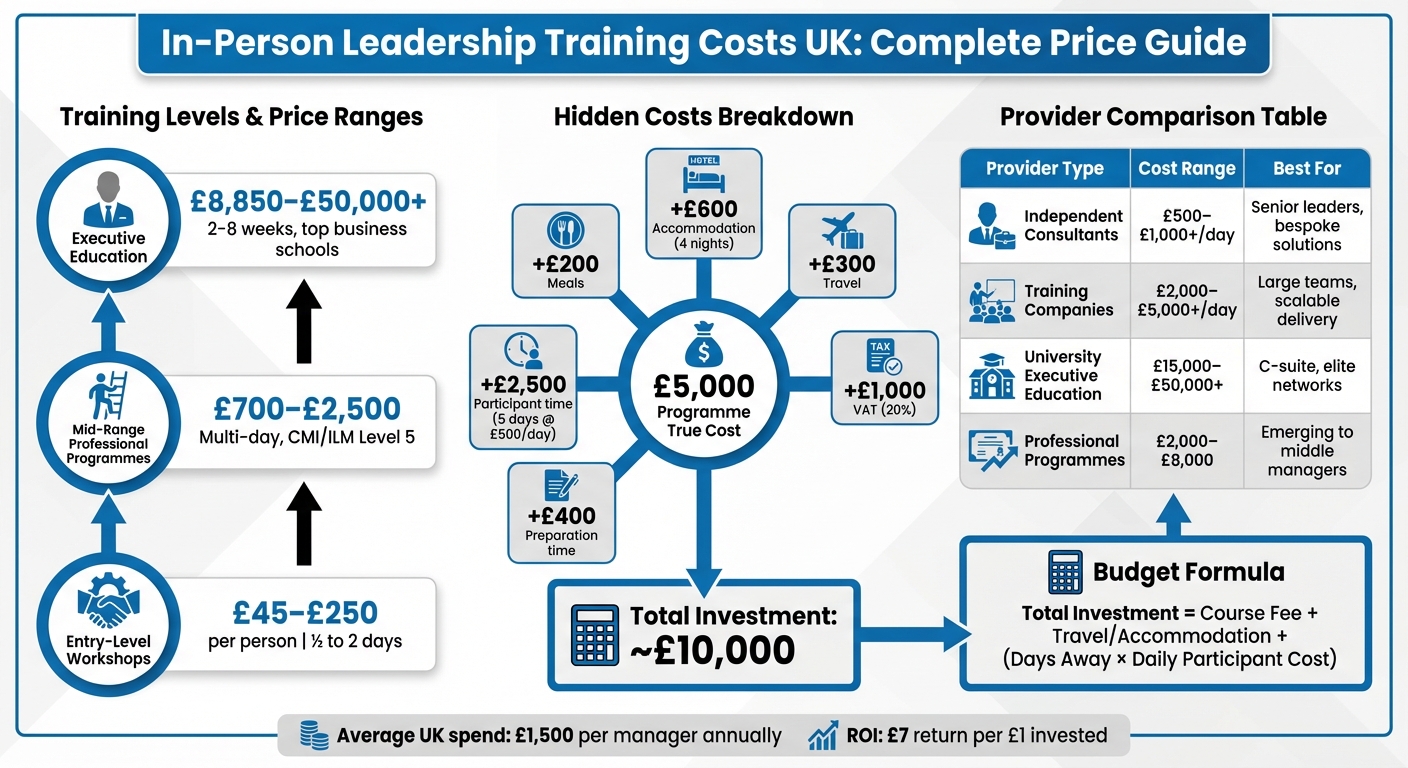
In-person leadership training in the UK varies widely in cost, depending on factors such as programme type, duration, and provider. Prices range from £45–£250 for entry-level workshops to £15,000–£50,000+ for high-level executive education. Additional expenses, including VAT, travel, accommodation, and participant time, can significantly increase the total investment. For example, a £5,000 programme may cost closer to £9,000 when these factors are included.
This article breaks down typical price ranges, factors influencing costs, and how to calculate the total investment. It also compares providers, including independent consultants, training companies, and university programmes, to help you choose the right option for your organisation.
Explore the full article to understand your options and next steps for shortlisting a training provider.
UK Leadership Training Costs by Provider Type and Level
Typical Price Ranges for In-Person Leadership Training
Entry-Level to Premium Pricing
In the UK, in-person leadership training comes with a wide range of price points. For emerging leaders, entry-level workshops typically cost between £45 and £250 per person. These sessions, lasting from half a day to two days, focus on essential skills and are often held locally to reduce travel and logistical expenses.
For mid-range options, professional programmes are priced between £700 and £2,500. These courses, which may span several days or offer accredited qualifications like CMI or ILM Level 5, are aimed at middle managers and experienced leaders. They provide structured training and recognised certifications. At the higher end, executive education programmes start at approximately £8,850 and can exceed £50,000. These premium offerings, often hosted by top-tier business schools, cater to senior leaders and C-suite executives. They typically last two to eight weeks and include features like renowned faculty, small cohort sizes (20–40 participants), and, in some cases, residential stays at prestigious venues.
The price differences are not just about the length of the programme. Premium courses often provide extras such as one-to-one coaching, 360-degree feedback, and comprehensive post-programme support. In contrast, entry-level workshops usually focus on delivering core content with minimal follow-up. It’s also important to account for VAT and additional costs when calculating the total investment.
VAT and Total Costs
The listed prices often exclude VAT and other related expenses, which are crucial to understanding the full cost of a programme. Most UK training providers quote fees exclusive of VAT. For instance, a course advertised at £5,000 will cost £6,000 once the standard 20% VAT is applied.
Beyond the base fee, organisations should also consider supplementary expenses, including:
- Travel: Around £300 for return train journeys.
- Accommodation: Approximately £600 for a four-night stay.
- Meals: Roughly £200.
- Opportunity cost of participant time: Estimated at five days, valued at £500 per day, totalling £2,500.
- Preparation time: An estimated £400.
When these factors are included, a £5,000 programme could result in a total investment of nearly £10,000. Taking a comprehensive view of costs ensures accurate budgeting and allows for fair comparisons between providers, helping avoid unexpected financial gaps.
What Affects Leadership Training Costs
Programme Length and Delivery Format
The duration of a leadership training programme plays a significant role in determining its cost. Short workshops, lasting anywhere from half a day to two days, are typically priced between £300 and £1,500. On the other hand, professional programmes spanning three to ten days usually range from £2,000 to £8,000. For extended programmes running over several months, costs can climb to between £5,000 and £15,000. However, as the programme length increases, the cost per learning hour often decreases, offering better value over time.
Residential programmes tend to be more expensive as they include accommodation, venue hire, and catering, while day programmes generally cover only the training sessions and basic refreshments. In-house training, delivered at an organisation's premises, can significantly lower costs per participant. For instance, a custom programme priced at £30,000 for 30 participants equates to about £1,000 per person, which is far less than external programmes that may exceed £3,000 per participant. Understanding these variations is crucial for accurately planning your leadership training budget.
Provider Credentials and Accreditation
The credentials of the training provider and the accreditation of the programme also influence costs. Programmes that lead to recognised qualifications, such as those from CMI or ILM, often include additional fees for registration, certification, and quality assurance.
Reputation plays a key role too. Prestigious institutions like London Business School or Oxford Saïd charge significantly higher fees - ranging from £10,000 to over £100,000. These costs reflect their brand reputation, high-profile faculty, and the exclusive networking opportunities they provide. In contrast, professional bodies offering CMI or ILM certifications typically charge between £1,000 and £5,000, while non-elite university programmes range from £2,000 to £15,000. Additionally, the expertise of the facilitators - whether they are junior trainers or former executives - can directly impact the daily rates and overall costs of the programme.
Venue Location and Included Services
The location of the training venue is another factor that affects pricing. Programmes held in London or at prestigious business school campuses are generally more expensive than those offered in regional locations or on-site at your organisation. Residential programmes in premium venues are particularly costly, as they include accommodation, high-end catering, and exclusive venue hire.
The range of services included in the programme fee can also vary widely. Some providers offer extras such as psychometric assessments, 360-degree feedback tools, individual coaching sessions, and post-programme follow-up support, all of which can increase the overall cost. Smaller cohorts, typically consisting of 20 to 40 participants, often come with higher per-person fees due to the greater individual attention provided. To ensure accurate budget comparisons, organisations should confirm exactly what is included in the programme fee before making a commitment.
What's Included in the Price
Standard Inclusions
Most programmes include the essentials such as core instruction, facilitation, and course materials like workbooks and handouts. Basic refreshments - think tea, coffee, and biscuits - are typically part of the package. If the training takes place at the provider's premises, the venue hire is usually covered. Additionally, participants often gain access to proprietary tools and frameworks. As Make Real Progress explains:
"What you're paying for isn't just the workshop or programme that's being delivered, it's also the facilitators' skills, experience and years of training".
However, some costs may not always be included. Formal assessments, certification fees, and full meals, for instance, can vary. While some programmes provide lunch as standard, others may only offer light refreshments. Attendance certificates are commonly included, but recognised qualifications from organisations like CMI or ILM often incur additional certification fees. For residential programmes, accommodation is frequently bundled into the price, whereas standard day workshops rarely include overnight stays. It’s worth checking whether VAT, trainer travel expenses, or assessment tools are part of the quoted fee.
These foundational components ensure a solid learning experience, while optional extras can enhance the overall value.
Additional Features and Benefits
Premium programmes often go beyond the basics, offering added services designed to deepen the learning experience. These might include one-to-one coaching sessions, action learning sets, or post-programme debriefs to reinforce key lessons. Some providers also grant access to proprietary learning platforms, enabling participants to review sessions or engage with follow-up modules. Robin Chandler from Impact Factory highlights:
"The investment is absolutely worth it when you think about the long-term benefits... [including] extras like refreshers, online tools, and coaching after the course".
High-end options may also feature pre-course consultancy and ongoing support after the programme, such as cascading sessions or periodic follow-ups. Additional tools like psychometric assessments and 360-degree feedback are sometimes included in more comprehensive packages. For corporate clients, packages may incorporate extra coaching sessions and supplementary materials.
sbb-itb-fa39ac2
How to Budget for In-Person Leadership Training
Calculating Your Total Investment
The course fee is just one piece of the puzzle. For instance, a programme priced at £5,000 could end up costing closer to £9,000 when you include travel, accommodation, meals, and the value of time participants spend away from their roles. As mentioned in the VAT and Total Costs section, these additional expenses often include train fares, hotel stays, food, lost productivity, and preparation time.
Some trainers also charge for travel, typically at 50p per mile, alongside accommodation and other incidental costs. If the training includes tools like 360-degree feedback or psychometric assessments, check whether these are included in the package or charged separately. When assessing costs, the focus should be on identifying which programme delivers the outcomes your organisation needs, rather than simply picking the cheapest option.
For larger groups, running in-house programmes can be a cost-effective choice. By hosting training on-site, organisations can avoid travel and accommodation expenses while still achieving quality results. With a clear understanding of these costs, it's easier to explore potential savings and funding opportunities.
Discounts and Funding Options
Once you've calculated the direct costs, you can look into ways to make the investment more efficient through discounts or funding. Many providers offer savings for booking multiple participants from the same organisation, establishing long-term partnerships, or scheduling training during quieter periods. Additionally, some programmes reduce fees for consecutive training days - for example, charging £1,800 for the first day, £1,600 for the second, and £1,400 for the third - leading to savings of over 22% for a week-long course.
In the UK, organisations can also tap into apprenticeship levy funds to cover accredited leadership qualifications through professional body partnerships, significantly lowering out-of-pocket expenses. When training multiple leaders, it’s often more effective to concentrate resources on high-potential individuals or critical development areas rather than spreading the budget too thinly. This targeted strategy tends to yield better results, with research suggesting that well-designed leadership programmes can deliver a $7 return for every $1 invested.
Comparing Different Types of Providers
Independent Consultants vs Training Companies
When planning your budget for leadership training, the type of provider you choose plays a significant role in determining costs. Independent consultants typically charge between £500 and over £1,000 per day, whereas training companies often charge £2,000 to £5,000 or more per day for corporate delivery. This price gap is more about the scale of delivery than the quality of training. Independent consultants usually focus on addressing specific organisational challenges and crafting tailored solutions. They often work closely with senior leaders to support strategic changes. On the other hand, training companies excel in delivering structured programmes at scale, making them ideal for training large groups across multiple locations simultaneously.
For organisations looking to train 10 or more employees, training companies offering in-house corporate rates can provide better value compared to enrolling individuals in public courses.
"For a team of 15, customised corporate training is almost always more cost-effective per person".
However, independent consultants are often better suited to situations requiring personalised expertise, such as developing unique training briefs or supporting high-level strategic initiatives.
Next, let’s explore how university executive education programmes differ from these options, especially in terms of cost and audience.
University Executive Education Programmes
University executive education programmes come at a higher price, ranging from £8,000–£25,000 for open courses to £15,000–£50,000 and above for elite programmes. For example, in December 2025, Warwick Business School offered its Executive Leadership programme for £10,750. This fee included course materials, networking events, overnight accommodation, yoga sessions, and executive coaching, though travel expenses were not covered.
These programmes are designed for senior directors and C-suite executives, focusing on areas such as enterprise leadership, board readiness, and organisational transformation.
"Executive programmes cost more because they require expert facilitators credible to senior audiences, small cohort sizes enabling peer interaction, [and] access to elite peer networks".
To summarise the key differences between provider types, here’s a comparison:
Provider Comparison Table
| Provider Type | Typical Cost | Target Audience | Main Differentiator |
|---|---|---|---|
| Independent Consultants | £500–£1,000 and above per day | Senior leaders, unique challenges | Bespoke strategy, deep expertise |
| Training Companies | £2,000–£5,000 and above per day | Large teams, scalable delivery | Consistency, lower per-head cost |
| University Executive Education | £15,000–£50,000 and above | C-suite, board-level leaders | Prestige, elite networks |
| Professional/Independent Programmes | £2,000–£8,000 | Emerging to middle managers | Practical skills, recognised qualifications |
Use this comparison to identify the provider type that aligns with your organisation’s training goals and budget.
Conclusion
Key Points to Keep in Mind
When evaluating the costs of in-person leadership training in the UK, it’s important to consider both direct and indirect expenses. The overall investment goes beyond just course fees and includes travel, accommodation, and the opportunity cost of participants’ time. On average, UK organisations allocate around £1,500 per manager annually for leadership development. While this figure can be justified by well-structured programmes, the priority should always be to choose training that addresses your organisation’s specific needs rather than simply opting for the lowest price. A helpful formula to estimate your total expenditure is: Total Investment = Course Fee + Travel/Accommodation + (Days Away × Daily Participant Cost). Don’t overlook the importance of budgeting for post-programme implementation support, as this is essential for achieving a meaningful return on your investment.
Consider what the training package includes - elements like pre-work, coaching sessions, and follow-up support are crucial for ensuring that the learning translates effectively into workplace improvements.
Different providers bring distinct benefits. Independent consultants can tailor solutions to your organisation, training companies often offer scalable and structured delivery, and university programmes provide access to high-level networks for senior leaders. For larger groups (typically 10 or more), in-house delivery often proves more cost-effective per participant compared to open programmes.
Explore opportunities to negotiate discounts for multiple participants or long-term partnerships, and always confirm what is included in the package before making a commitment.
Ultimately, the best investment is one that balances cost with quality, aligns the provider’s expertise with your organisation’s goals, and delivers measurable improvements in leadership capability. Use these guidelines to choose a training programme that effectively supports your leadership development objectives.
FAQs
How can I calculate the full cost of in-person leadership training, including hidden expenses?
To estimate the total cost of in-person leadership training in the UK, you need to consider the trainer's fee alongside additional expenses that may not be immediately apparent. These often include VAT, venue hire, catering, travel, materials, and the potential impact of participants being away from their regular duties.
Begin with the trainer's base fee, which typically ranges from £250 to £5,000 per day or session. Remember to add VAT at 20%, as most UK providers quote prices excluding VAT. Next, account for venue-related costs, such as hire fees, catering, and equipment, which can add approximately 15–30% to the trainer's fee. Additionally, include travel and accommodation expenses for the trainer, along with any charges for materials like printed handouts or digital resources.
It’s also worth factoring in the cost of lost productivity. This involves estimating the financial impact of participants being away from their usual roles during the training sessions.
By taking all these elements into account, you can create a realistic and comprehensive budget for your leadership training programme.
What should I consider when selecting a leadership training provider?
When selecting a leadership training provider, it’s essential to assess their expertise and experience. Providers can range from business schools and specialist firms to independent consultants, each offering different price points and reputations. Look for qualifications like CMI or ILM accreditation, and ask for case studies to verify their ability to deliver measurable outcomes. If your organisation requires sector-specific knowledge or experience with senior executives, be prepared for higher costs, but these providers often deliver a more tailored and impactful experience.
Consider the delivery format and level of customisation that best suits your needs. In-person workshops can incur extra expenses, such as venue hire, travel, or catering, which will add to the overall cost. Smaller group sessions or one-to-one coaching are typically more expensive per participant, whereas larger in-house sessions are usually charged at a flat rate. Decide whether your organisation would benefit from a bespoke programme designed specifically for your needs or if a standardised course would meet your objectives.
Lastly, examine the pricing structure and additional costs. Providers may charge per participant, per day, or offer retainer agreements for ongoing support. Don’t overlook potential extra costs such as training materials, follow-up coaching sessions, or travel expenses. Comparing quotes and understanding exactly what each package includes will enable you to choose a provider that aligns with both your budget and leadership development goals.
Are there funding options or discounts available for leadership training in the UK?
Yes, organisations in the UK have several options to lower the cost of in-person leadership training programmes.
One common approach is to take advantage of group discounts or in-house rates. These are often available when booking for larger teams, with the cost per person typically decreasing for groups of ten or more. Many providers also offer corporate packages, which bundle multiple seats or programmes at a reduced overall price.
Another way to save is by exploring scholarships or discounts offered by business schools. These might include alumni discounts, early-bird promotions, or other special offers. Additionally, organisations can offset costs through tax relief. Under HMRC rules, training expenses - including fees, books, and travel - are often deductible as business expenses, which can help reduce the total outlay.