Leadership training costs in the UK vary widely, from online courses priced at a few hundred pounds to postgraduate programmes costing up to £30,000 annually. Common pricing factors include group size, programme length, content customisation, delivery format, and provider expertise. For example, group workshops for up to 12 participants typically cost £1,300–£1,900 per day, while tailored programmes for senior leaders can exceed £12,000.
This article explains how these factors impact costs, helping HR and L&D managers compare options and budget effectively. Explore relevant provider listings and pricing pages to find solutions that align with your needs and budget.
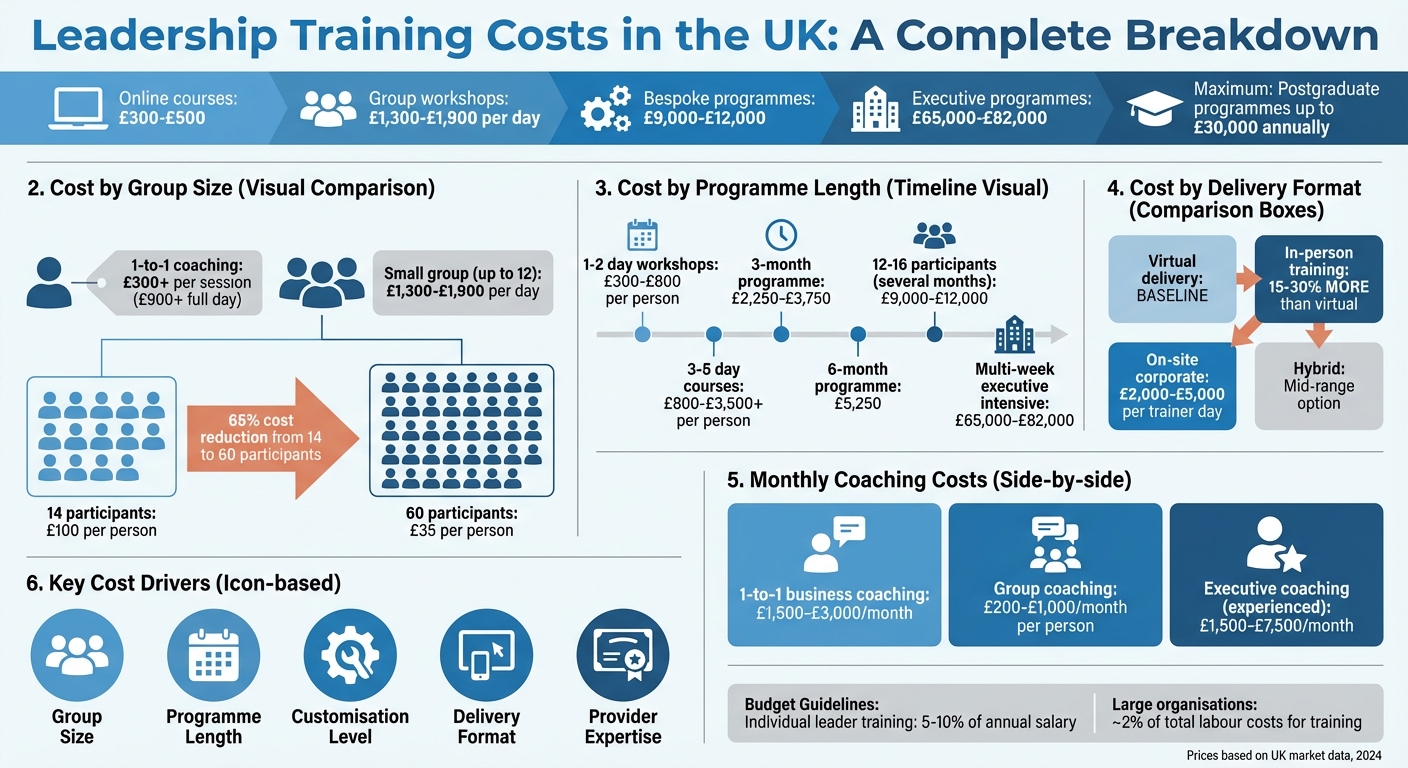
Leadership Training Costs UK: Price Comparison by Format and Group Size
Pricing Your Leadership Training & Development Programs
Main Factors That Affect Leadership Training Prices
Understanding the elements that influence leadership training costs enables organisations to assess quotes with greater precision. Below, we delve into five key factors that explain the wide variation in pricing across providers and programmes.
Group Size and Cost Per Person
Smaller groups typically result in higher costs per person, as fixed expenses are spread across fewer participants. One-to-one coaching is the most expensive, with individual sessions starting at £300 and full-day sessions costing upwards of £900.
For group training, many providers charge a flat daily rate for up to 12 participants. For example, one provider charges between £1,300 and £1,900 per day for groups of this size. Increasing participant numbers can significantly reduce the per-person cost. Data from Elite Training shows that for team-building events held at client premises, the per-person cost drops by approximately 65% when participant numbers increase from 14 to 60 – falling from £100 per person to just £35 per person.
"As a broad rule of thumb, the more senior the participants, or the more participants there are at one time, the more expensive the training will be",
notes Make Real Progress.
This factor lays the foundation for understanding how other variables influence training costs.
Programme Length and Frequency
The duration of a programme is a key cost driver. Longer, more comprehensive programmes spanning several months can range from £9,000 to £12,000 for 12–16 participants. Shorter workshops lasting one to two days are priced between £300 and £800 per person, while more intensive courses running three to five days cost between £800 and £3,500 or more per person.
High-level executive leadership programmes at prestigious institutions come with much steeper fees, ranging from £65,000 to £82,000 for multi-week intensive programmes. Frequency also plays a role: monthly one-to-one business coaching typically costs £1,500 to £3,000 per month, whereas group coaching reduces the cost per individual to between £200 and £1,000 per month. For example, a three-month emotional intelligence programme costs around £2,250 to £3,750, but extending it to six months increases the price to roughly £5,250.
"Longer training lasting multiple days has higher overall costs than brief sessions",
confirms Robin Chandler, Training Expert and Founding Partner at Impact Factory.
Balancing the length of the programme with desired outcomes is, therefore, an important consideration.
Content Customisation and Specialist Topics
Off-the-shelf programmes are generally less expensive because the materials and structure are pre-designed. In contrast, bespoke training requires additional investment for consultancy, adapting content to align with organisational needs, and developing tailored materials.
Customised programmes often start at £1,250 for half or full-day sessions. Specialist programmes, such as "Inspired Leadership" for 10 participants, begin at £12,000. Training that targets senior leaders or covers niche topics typically requires facilitators with advanced expertise, which drives up costs.
"Training delivered by renowned coaches with proven track records will typically have a higher price point, reflecting their wealth of experience and insights",
notes Maxwell Leadership.
Additional elements like branded materials, specific assessments, or action learning sets can also increase expenses.
"Because each course is unique and tailored to client's needs, it is difficult to give a specific price for a course",
acknowledges Elite Training.
Delivery Format and Location
In-person training is typically 15–30% more expensive than virtual options due to additional costs such as venue hire, trainer travel, accommodation, and catering. Virtual delivery eliminates these costs but may not engage all learners equally. Hybrid formats, which combine online modules with face-to-face coaching, offer a compromise by reducing time away from work while maintaining some personal interaction. Custom corporate training delivered on-site is usually charged per trainer day, with rates ranging from £2,000 to £5,000 or more.
Provider Experience and Credentials
The expertise and reputation of the provider significantly influence pricing. Established companies with accreditations and extensive experience generally charge more than less experienced consultants. Executive coaching from highly skilled professionals ranges from £1,500 to £7,500 per month, reflecting their qualifications and track record. For group training, experienced facilitators typically charge between £1,300 and £1,900 per day for up to 12 participants, whereas newer trainers may charge less than £1,000 per day.
Organisations must weigh the value of a provider’s expertise against their budget. A provider's credentials and reputation can often justify higher fees, ensuring a worthwhile investment in leadership training.
sbb-itb-fa39ac2
How to Manage Leadership Training Costs
Understanding what drives training costs is just the first step. The next challenge is managing these expenses effectively without sacrificing the quality of outcomes. Here are practical ways to keep costs under control while ensuring impactful results.
Compare Providers Using a Directory
Starting with clear and transparent pricing can help avoid wasting time on providers that exceed your budget. As Enable Excellence highlights:
"I find it incredibly frustrating when suppliers and providers don't tell you how much something will cost and the only way to find out is to contact them... transparency is key".
To address this, Leadership Training Hub offers tools to filter providers based on cost, delivery methods, and areas of expertise. This allows organisations to compare options side-by-side and quickly identify those with pricing structures that fit their budget. Whether you're looking for executive coaching, team workshops, or long-term leadership programmes, this approach simplifies shortlisting and ensures financial clarity.
Negotiate Group Rates and Custom Packages
Booking training for larger groups often opens the door to significant savings. For instance, while a public leadership course at £2,000 per participant would cost £30,000 for a team of 15, a tailored corporate programme for the same group might range from £10,000 to £15,000 - cutting costs by up to two-thirds.
To avoid unexpected expenses, Make Real Progress advises ensuring quotes clearly outline what is included, such as materials, travel, intellectual property, and post-training support. Organisations can also save by using pre-designed programmes for basic skills like time management, leaving bespoke training for more strategic needs. Additional cost-saving strategies include negotiating discounts for multiple programmes or committing to long-term partnerships. Opting for half-day or on-site workshops can also help reduce travel and accommodation costs.
Focus on High-Return Training Elements
Investing in training components that deliver measurable results ensures better value for money. Targeting key groups - such as high-potential employees or newly promoted leaders - can generate noticeable short- to mid-term benefits. Diagnostic tools, like leadership assessments, can pinpoint development needs upfront, ensuring the training addresses specific gaps rather than generic skills.
Blended learning models, which combine digital modules with in-person coaching, strike a balance between cost-effectiveness and engagement. Incorporating elements like action learning, individual coaching, and follow-up activities ensures that lessons translate into workplace improvements. Setting clear ROI goals and tracking progress through assessments can justify higher spending by demonstrating tangible improvements in skills and performance. As a guideline, budgeting 5% to 10% of a leader's annual salary for training is common, while large organisations often allocate around 2% of total labour costs to training.
Conclusion
The cost of leadership training depends on several factors, including group size, programme duration, level of customisation, delivery method, and the expertise of the facilitator. By understanding these elements, organisations can plan budgets more accurately, minimise unexpected costs, and appreciate that fees reflect not just the programme but also the facilitator's skills and experience built over years.
Managing these costs effectively requires a strategic approach. Rather than simply opting for the lowest price, consider negotiating group rates or focusing on high-impact teams to maximise value. Clearly define your objectives and ensure quotes include all necessary elements, such as materials, travel expenses, and ongoing support, to avoid any hidden costs.
FAQs
What factors should organisations consider to balance cost and effectiveness in leadership training?
Balancing the cost and impact of leadership training begins with pinpointing your organisation's specific needs. Off-the-shelf programmes tend to be more budget-friendly as they rely on pre-designed materials. However, these may not fully address the unique challenges your team faces. In contrast, tailored training - designed around your industry, organisational culture, and leadership gaps - comes at a higher cost but can lead to more targeted learning and noticeable improvements in workplace performance.
For a cost-effective yet impactful approach, consider blended learning. This method mixes in-person sessions with online modules, cutting down on travel and venue expenses while supporting better skill retention. Establishing clear, measurable objectives - such as enhanced team productivity or quicker project completion - can also help you evaluate the return on investment and ensure the training delivers practical results.
A resource like Leadership Training Hub can simplify the process of comparing providers, reviewing pricing options, and finding a programme that fits your budget while addressing your leadership development needs.
Why is customised leadership training worth the higher cost?
Customised leadership training, while generally more costly, provides considerable value by addressing the specific needs of an organisation. By aligning the programme content with particular challenges, objectives, and the company’s culture, participants acquire practical, relevant skills that can be implemented straight away. This tailored approach often leads to higher levels of engagement, improved knowledge retention, and noticeable enhancements in workplace performance.
The higher price reflects the effort and expertise involved in conducting a needs analysis, designing bespoke materials, and delivering the programme. However, organisations often observe tangible benefits, such as improved leadership practices, stronger team dynamics, and lower staff turnover. Additionally, customised programmes offer flexibility in delivery - whether in-person, online, or through a blended approach - helping to minimise disruption to daily operations.
For UK businesses looking for tailored leadership development solutions, Leadership Training Hub simplifies the process of finding reliable providers, enabling organisations to compare options and choose the best fit for achieving meaningful results.
How does the delivery method influence the effectiveness of leadership training?
The way leadership training is delivered significantly influences participant engagement and the programme's overall effectiveness. In-person workshops create an immersive environment where participants can engage in live discussions, interpret body language, and foster genuine connections with peers. Facilitators can adjust activities in real time and include practical exercises, which are particularly useful for tackling complex subjects like emotional intelligence or strategic decision-making. However, this format often comes with additional expenses, such as venue hire, travel, and catering.
Virtual and blended formats offer greater flexibility and are well-suited for teams spread across different locations. Tools like live video sessions, breakout rooms, and on-demand materials help maintain participant engagement while cutting down on logistical costs. A blended approach often strikes a balance, combining the personal interaction of in-person sessions with the convenience and lasting value of digital resources.