Typical leadership training costs vary widely in the UK. View typical leadership training costs in the UK.
Executive coaching in the UK supports senior leaders in improving leadership skills, decision-making, and performance. Costs vary widely, with hourly rates averaging £500 but ranging from £250 to £2,000 depending on the coach's experience, the executive's role, and the programme structure. Common fee models include hourly rates, session packages, and monthly retainers, with London-based coaches typically charging higher rates.
This guide explains UK price ranges, factors influencing fees, and budgeting strategies to help you compare providers effectively. Use this information to assess your options and shortlist coaches that meet your organisation’s needs.
What Executive Coaching Costs in the UK
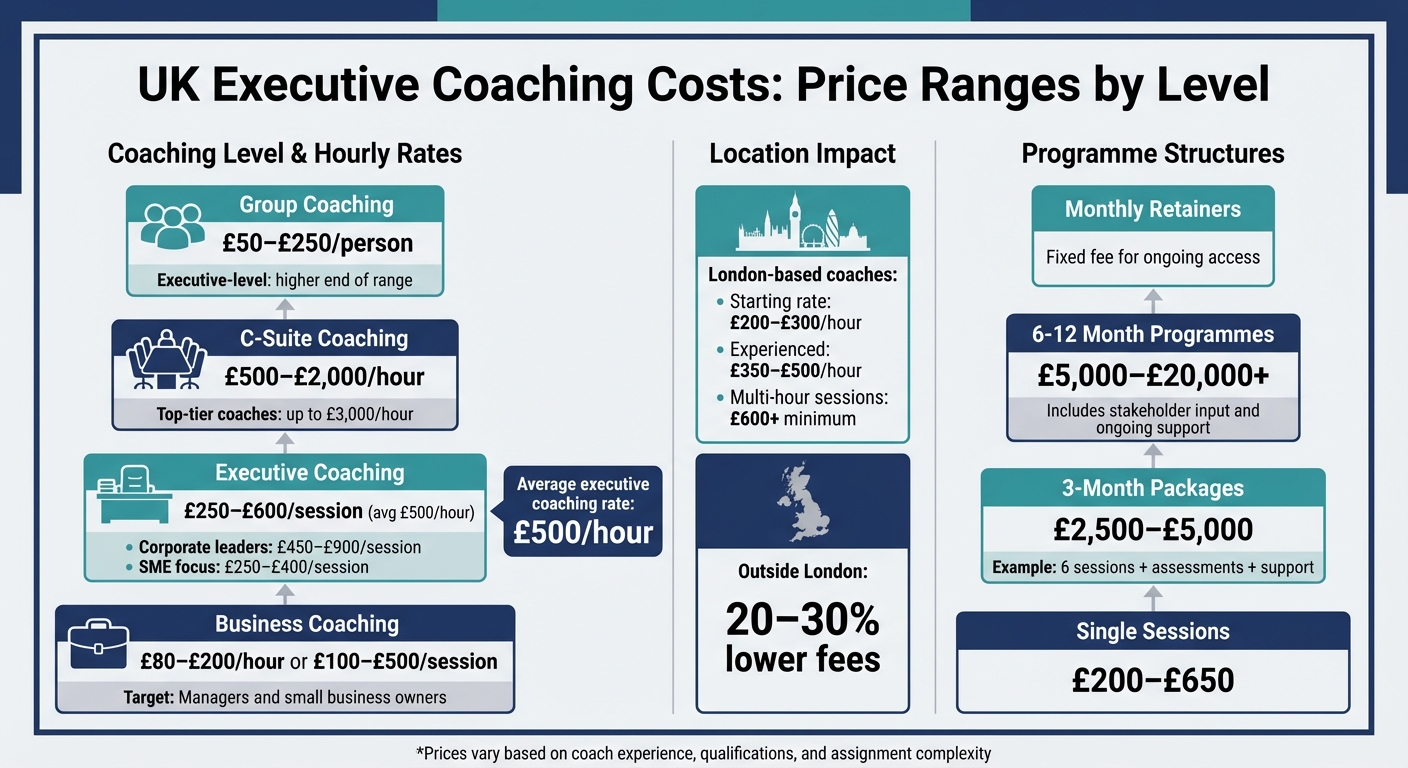
UK Executive Coaching Costs by Level and Session Type
How Coaches Structure Their Fees
Executive coaching fees in the UK are typically organised into three main structures: hourly rates, programme packages, and monthly retainers.
- Hourly rates are straightforward - you pay for each session based on the time spent, usually in one-hour or 90-minute blocks.
- Programme packages combine multiple sessions into a single offering, often including extras like initial assessments, follow-up calls, and progress reviews. These packages usually span three, six, or 12 months.
- Monthly retainers provide ongoing access to a coach for a fixed monthly fee. This can include scheduled sessions, on-demand support, and sometimes group coaching for leadership teams.
For longer engagements, programme packages often work out more cost-effective than paying per session. For example, a coach charging £500 per hour might offer a three-month package including six sessions, assessments, and email support for £2,500 - lowering the per-session cost. Retainers are particularly useful for organisations requiring consistent coaching across multiple executives or during periods of significant organisational change.
Below is a breakdown of typical price ranges for different coaching levels in the UK.
UK Price Ranges by Coaching Level
- Business coaching: Typically costs £80–£200 per hour or £100–£500 per session. This option is ideal for managers building leadership skills or small business owners addressing specific challenges.
- Executive coaching: For senior leaders, fees range from £250–£600 per session, with an average of around £500 per hour. For corporate leaders, rates are often between £450–£900 per session, whereas coaching focused on SMEs tends to range from £250–£400 per session.
- C-suite coaching: This level commands the highest fees, typically £500–£2,000 per hour, with top-tier coaches charging up to £3,000 per hour. Such rates reflect the complexity of challenges at the executive level, the coach’s experience, and the potential business outcomes.
- Group coaching: A more budget-friendly option, with costs ranging from £50–£250 per person. However, executive-level group sessions tend to be priced at the higher end of this range.
Next, we’ll look at how location and delivery methods can influence these costs.
How Location and Delivery Method Affect Price
Coaching fees vary significantly by location. London-based coaches typically charge more, with hourly rates starting from £200–£300, rising to £350–£500 for more experienced professionals. Executive coaching sessions in London often have a minimum cost of £600 for multi-hour engagements. Outside London, fees are generally 20–30% lower due to reduced overheads, though detailed regional data is less available.
The delivery method also plays a role in pricing, though the difference is less pronounced. In-person sessions may include additional costs, such as travel expenses or venue hire, especially if the coach visits your office. Virtual coaching via video calls usually matches in-person rates, as the coach’s time and expertise remain unchanged. Ultimately, the choice between in-person and virtual coaching often comes down to personal preference and logistical considerations rather than cost.
What Affects Executive Coaching Prices
Coach Qualifications and Experience
The qualifications and experience of a coach are key factors in determining their fees. Coaches with basic certifications, such as those from the Institute of Leadership & Management (ILM) or Continuing Professional Development (CPD), typically charge between £200 and £300 per hour. Meanwhile, coaches holding advanced qualifications - such as ILM Level 5 or 7, master's degrees in coaching psychology, or accreditations from organisations like the European Mentoring and Coaching Council (EMCC) or the Association for Coaching - often charge higher rates, ranging from £350 to £500 per hour or more.
Experience also plays a significant role. Coaches with over a decade of experience, especially those who have worked with well-known global brands, usually charge around £500 per hour. In contrast, less experienced coaches generally fall within the £100–£300 per hour range. If a coach has expertise in a specific industry, their rates can increase by 20–50% due to the specialised knowledge they bring. These factors, combined with the seniority of the executive and the complexity of the coaching assignment, further influence pricing.
Executive Level and Assignment Complexity
The seniority of the coachee is another major determinant of cost. Coaching for mid-level managers or small business owners generally costs between £100 and £500 per hour. However, for C-suite executives, fees typically range from £500 to £2,000 per hour, reflecting the higher stakes and the complexity of their organisational roles.
The nature of the coaching assignment also affects pricing. Assignments involving crisis leadership, large-scale organisational change, or high-stakes roles in sectors like finance often push fees beyond £1,000 per hour. These situations demand not only advanced expertise but also a proven ability to deliver measurable results in high-pressure environments, justifying the higher costs.
Programme Structure and Additional Support
The structure of the coaching programme is another factor influencing costs. Single coaching sessions usually cost between £200 and £650, while multi-session packages spanning three to 12 months can range from £3,000 to £12,000. Purchasing sessions in bulk often provides better value compared to booking them individually, though additional elements such as progress milestones and extra support will increase the total cost.
Extra services also contribute to higher fees. Elements like psychometric assessments, coaching materials, CV reviews, follow-up calls, and email support between sessions add both value and expense. Longer sessions are also priced higher; for example, a 60-minute session for an SME leader might cost £300, while a 90-minute session for an executive could reach £500. If the programme includes formal accreditation, such as ILM certification, the fees will rise further due to the associated administrative and evaluation processes.
How to Budget for Executive Coaching
Define Your Goals and Success Criteria
Before setting a budget, it’s important to clarify what you want to achieve with executive coaching. Are you preparing a successor for a senior role, helping a leader navigate organisational change, or addressing the risks of a new hire underperforming? The specific challenge will guide both the intensity and cost of the coaching programme. For example, coaching for performance improvement, leadership development, or strategic transitions will require varying levels of investment aligned with the expected business impact.
Typical session costs range from £450–£900+ for C-suite executives, while mid-level managers or SME leaders generally fall between £250–£400 per session. Allocating your budget based on the seniority and priority of the role ensures funds are directed to areas with the greatest potential return. Clearly defined goals will also help shape the structure and scale of the programme.
Decide on Programme Length and Scope
The duration and scope of the coaching programme should align with your objectives. For focused goals, such as preparing for an interview, handling a specific transition, or addressing targeted behavioural changes, short-term coaching may be sufficient. These programmes typically involve three to four sessions over three months, with costs ranging from a few hundred to several thousand pounds per leader, depending on the coach’s rate.
For more comprehensive needs, such as leadership development, strategic role preparation, or cultural transformation, longer-term coaching is more appropriate. These engagements often include six to twelve sessions spread over six to twelve months, along with additional support between sessions and input from stakeholders. Costs for these programmes can range from £5,000 to £20,000 or more per executive, particularly when working with experienced senior-level coaches.
Short-term coaching is ideal for addressing specific, time-bound challenges. In contrast, longer programmes are better suited to major transitions, succession planning, or broader leadership shifts. You might also consider starting with a diagnostic phase to assess needs before committing to a full programme.
Measure Return on Investment
To ensure your budget is well spent, focus on the measurable outcomes of coaching. While hourly rates are a factor, the real value often lies in broader benefits like improved employee retention, stronger decision-making, and enhanced team performance. When budgeting, look for programmes that include baseline metrics, such as 360-degree feedback, to track progress over time.
It’s also worth allocating funds for involving line managers in the process. Joint goal-setting and review meetings can help link coaching outcomes to performance objectives, increasing the likelihood of tangible, measurable results. By tying coaching investments to clear business benefits, you can better justify the expenditure and evaluate its impact.
sbb-itb-fa39ac2
How to Find and Compare Executive Coaches
Where to Find Executive Coaches in the UK
Most organisations start by seeking professional referrals or conducting targeted online searches to find executive coaches with relevant sector expertise. Accreditation bodies like the International Coaching Federation (ICF), European Mentoring and Coaching Council (EMCC), and Association for Coaching (AC) maintain directories of accredited coaches. These directories ensure coaches meet recognised standards in qualifications and ethics. Coaches accredited by the ICF typically charge between £350 and £500 per hour.
UK-specific directories, such as Leadership Training Hub, offer a centralised way to find executive coaches. These platforms allow organisations to filter by specialism, delivery format, and price range while providing detailed profiles that go beyond standard marketing. Profiles often include information on client focus, methodologies, and additional services. Many organisations narrow their search to two or three shortlisted providers before making a final choice. Using a directory with advanced filters for sector focus, accreditation, and pricing can save time and simplify the selection process. Once you have your shortlist, it’s important to ask specific questions to confirm the coach aligns with your needs.
Questions to Ask Before Hiring
When evaluating a coach, it’s essential to clarify the full cost structure and what’s included. Ask about the length of sessions (usually 60–90 minutes), whether materials or assessments are provided, and if there are extra charges for stakeholder meetings or progress reports. It’s also worth exploring the coach’s background, formal training, experience with similar clients, and how they measure progress - particularly if their rates are on the higher end.
Questions such as "How do you structure programmes for executives at my level?" and "What does success look like, and how will we track it?" can help you gauge their approach. Check if they use tools like 360-degree feedback or other diagnostics to ensure measurable outcomes. Additionally, ask what steps they take if the coaching relationship isn’t working. Addressing these points early on can help avoid misunderstandings and ensure the coach’s methods align with your organisation’s goals.
How to Compare Quotes and Choose a Provider
Once you’ve clarified programme details, compare providers by reviewing detailed, itemised quotes. These should outline session costs, programme length, and any additional services, such as psychometric assessments or follow-up support. For example, Voyager Coaching charges £300 per session (60–75 minutes) for SME leaders and £500 per session (75–90 minutes) for executives. Nicola Simpson offers packages ranging from £650 for three sessions to £4,999 for comprehensive executive programmes.
When comparing providers, consider their experience working with similar roles, their qualifications, and whether their methodology suits your organisation’s needs. Focus on the overall value and potential return on investment rather than just the price. Higher fees may reflect a strong track record and the ability to deliver meaningful results in areas that matter most to your business.
Conclusion
Executive coaching fees can differ significantly depending on the coach's expertise and the complexity of the assignment. In London, hourly rates typically range from £200 to £500, with elite coaches charging up to £2,000 per hour. These figures can help you plan a realistic budget, ensuring you avoid overspending on superficial credentials or underinvesting in high-impact coaching.
To budget wisely, consider the seniority of the executive, the risks involved, and the potential impact of the coaching. Establish clear objectives and check the coach's experience with similar roles. While rates under £100–£150 per hour might suggest limited expertise or a more generic service, not every organisation requires a coach charging over £1,000 per hour. Experienced, mid-range providers often deliver excellent results when their skills align with your specific needs. The key is to tie your investment to the role's importance and the anticipated outcomes.
When reviewing quotes, focus on the overall value rather than just the price. Look closely at what the programme includes - session lengths, assessments, stakeholder engagement, and follow-up support - and assess whether the coach's approach aligns with your organisation's goals. UK directories provide advanced filters for price, accreditation, and specialisms, making it easier to shortlist suitable providers.
The most effective coaching investment is one that fits your business priorities and delivers measurable improvements. By aligning your budget with your organisational needs and balancing cost with quality, you can make an informed decision that supports long-term leadership and organisational success.
FAQs
What should I look for when selecting an executive coach in the UK?
When selecting an executive coach, it's important to assess their expertise in areas such as emotional intelligence, leadership growth, or managing change. Equally, consider their experience and reputation to ensure they bring the right level of insight and credibility. It’s also essential that they are familiar with UK business practices and can adapt their methods to align with your organisation’s objectives.
Practical considerations matter too. Look at their delivery options, whether they offer in-person sessions, online coaching, or a mix of both. Additionally, check that their fees fit within your budget. Taking the time to weigh these factors carefully will help you choose a coach who meets your specific requirements.
How can I set the right budget for executive coaching in the UK?
To plan a suitable budget for executive coaching, start by assessing a few critical elements, such as the coach's level of expertise, the programme's scope, and the delivery method - whether sessions will take place in-person or online. In the UK, costs can vary significantly, so it's essential to align your spending with your organisation's leadership objectives and the outcomes you aim to achieve.
Consider the complexity of your requirements, the length of the coaching engagement, and how much customisation is needed. Comparing different providers and their pricing structures can help you make an informed choice that aligns with your organisation's specific goals.
What are the advantages of choosing an executive coaching programme over hourly sessions?
Opting for an executive coaching programme instead of standalone hourly sessions comes with several advantages. Programmes often provide better value for money, as they are usually priced more attractively compared to booking individual sessions. They also offer continuity, ensuring your development follows a structured plan that builds on each session for steady and sustained growth.
Moreover, these programmes are designed to address a broad spectrum of leadership skills and topics, offering a more rounded approach to personal and professional growth. This makes them particularly suitable for organisations or individuals looking for measurable outcomes and lasting improvements.