Executive coaching in the UK typically costs between £260 and £1,200 per session, depending on the seniority of the leader and the coach’s experience. For CEOs and high-level executives, fees can exceed £1,000 per hour, with intensive programmes costing upwards of £60,000. Remote coaching has grown in popularity, offering flexibility and lower costs compared to in-person sessions.
This guide explains pricing models, regional differences, and factors influencing fees, helping HR and L&D teams budget effectively and compare providers. Use our directory to find executive coaching options tailored to your organisation's needs.
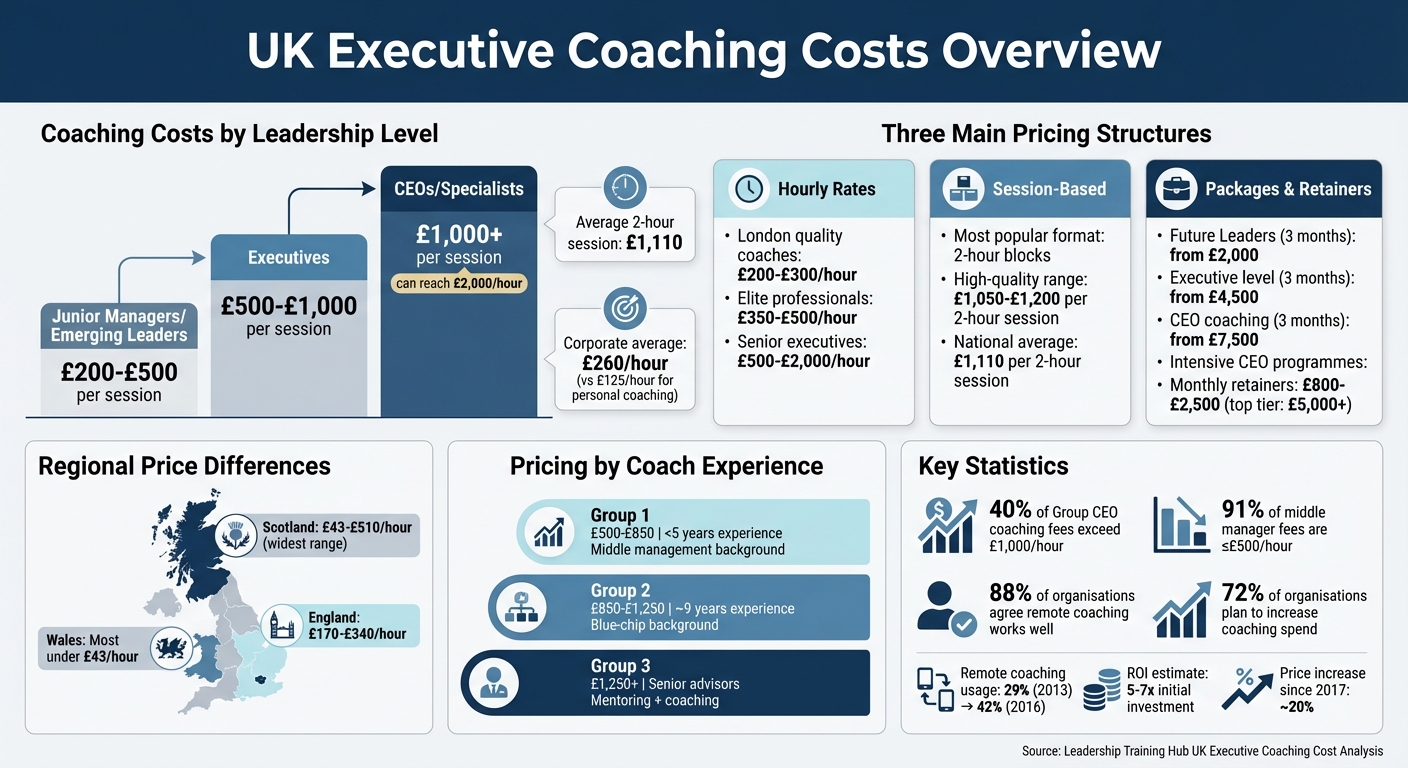
UK Executive Coaching Costs by Leadership Level and Pricing Model
Executive Coaching Costs for UK Enterprises: What the Data Shows
Executive coaching consistently commands higher fees than other coaching types, such as life or career coaching, due to the expertise required to support senior leadership roles. In the UK, corporate coaching rates average around £260 per hour, which is double the typical £125 per hour charged for self-funded personal coaching. This price difference reflects the higher stakes and complexity involved in developing executives.
For high-quality executive coaching, organisations generally pay between £1,050 and £1,200 for a two-hour session. According to Lequin, a specialist in executive coaching, this range represents good value:
A reasonable rate for high quality executive coaches, in our view, is £1050 to £1200 per two-hour executive coaching session in the UK. There is no evidence to suggest that paying more than this gets you a better coach
However, fees vary significantly depending on the seniority of the coachee. For Group CEOs and main board directors, 40% of coaching fees exceed £1,000 per hour, while 91% of fees for middle managers are at or below £500 per hour.
Regional factors also influence pricing. In England, corporate coaching rates typically range from £170 to £340 per hour, whereas Wales offers much lower rates, with most under £43 per hour. Scotland shows the broadest variation, with fees spanning from £43 to £510 per hour, depending on the provider.
Common Pricing Models
Executive coaching fees are structured around three primary models:
- Hourly rates: Often used for shorter engagements, particularly in London, where rates range between £200 and £300 per hour for high-quality coaches. Elite professionals may charge £350 to £500 per hour, and for senior executives like CEOs, rates frequently exceed £500 per hour, reaching as high as £2,000 per hour.
- Session-based pricing: This is now the most popular approach, with fees typically structured in two-hour blocks. The average cost for a two-hour session in the UK is £1,110. Enterprise clients are often charged on a "+VAT" basis, while individual clients may receive all-inclusive pricing.
- Package and retainer models: These are gaining traction as organisations seek long-term value. Monthly retainers range from £800 to £2,500, with top coaches earning over £5,000 per month. For complete programmes, fees generally fall between £4,500 and £7,000, depending on the coachee's seniority. As Robin Waite explains:
Consultants may command larger payments upfront for their expertise, but coaches often realise greater lifetime earnings per client
These models reflect a shift towards more predictable and sustained revenue for coaches.
Recent Changes in UK Coaching Prices
Several trends have influenced executive coaching costs and delivery in recent years. Rates have increased by around 20% since 2017, driven by inflation and market adjustments. However, the most notable changes have been in delivery formats and pricing strategies rather than simple rate hikes.
Remote coaching has become increasingly popular, with usage rising from 29% in 2013 to 42% in 2016. Today, 88% of organisations agree that remote coaching works well after an initial face-to-face meeting. Platforms like Zoom and Teams have reduced travel and accommodation costs for enterprises.
Another significant development is the adoption of value-based pricing, where fees are tied to measurable outcomes like ROI or business performance improvements. Many large enterprises now rely on vetted "coaching pools" to ensure consistent quality and standardised fees. Coaches with lower fees (often between £500 and £850 per session) but limited international experience are increasingly overlooked. This shift reflects executive coaching’s evolution from being seen as a remedial tool to becoming a strategic investment in top performers and high-potential leaders. Notably, 72% of organisations plan to increase their spending on both internal and external coaching.
Hourly, Session, and Package Pricing Explained
Understanding how pricing is structured - whether hourly, per session, or as a package - can help businesses budget effectively and compare providers clearly. Many coaches favour package pricing over individual sessions, as long-term programmes tend to deliver more meaningful results.
Hourly and Session Rates
Hourly rates for executive coaching in the UK can vary significantly depending on factors like the coach's qualifications, leadership experience, and the seniority of the client being coached. On average, corporate coaching costs around £260 per hour, which is roughly double the rate for personal or life coaching. However, this figure can fluctuate widely based on the coach’s expertise and location.
For junior managers or emerging leaders, a 60–90-minute session typically costs between £200 and £500. For executives, rates increase to £500 to £1,000 per session, while CEO or specialist coaching often exceeds £1,000 per session. Regional differences also play a role, with England generally commanding higher rates and Wales being on the lower end.
The most popular session format is the two-hour block, with top-tier UK executive coaches charging between £1,050 and £1,200 for this duration. The national average for a two-hour session is approximately £1,110.
| Coach Category | Rate (per 2-hour session) | Experience Profile |
|---|---|---|
| Group 1 | £500–£850 | Less than 5 years’ experience; background in middle management; skills-focused coaching |
| Group 2 | £850–£1,250 | Around 9 years’ coaching experience; blue-chip business background; high standards |
| Group 3 | £1,250+ | Often combines mentoring and advisory services alongside coaching |
Given the structure and costs of individual sessions, many organisations opt for package solutions to maximise the benefits of sustained coaching.
Enterprise Package Options
While session-based pricing offers flexibility, package programmes are increasingly popular for achieving long-term goals. These packages often run for three to six months, though CEO-level engagements can extend over several years, serving as an ongoing "sounding board". Packages frequently include diagnostics, assessments, and continuous support.
For Future Leaders coaching, three-month packages typically start at around £2,000. At the executive level, similar packages begin at £4,500, while CEO and specialist coaching packages start from approximately £7,500. Intensive CEO coaching programmes for longer durations can exceed £60,000.
Monthly retainers are another option, ranging from £800 to £2,500, with top-tier coaches charging over £5,000 per month. Most packages are now delivered remotely, which maintains their effectiveness while eliminating travel expenses and accommodating busy schedules.
What Affects Executive Coaching Costs
Understanding the factors that influence the cost of executive coaching can help organisations plan their budgets effectively and compare providers fairly. Two key elements that shape pricing are the coach's qualifications and experience, as well as the delivery format and level of customisation offered in the programme.
Coach Experience and Qualifications
Coaches with advanced qualifications, such as Level 7 certifications from ILM or CMI, typically charge higher fees. Similarly, those with substantial experience, particularly at the C-suite level, command premium rates. In contrast, less experienced coaches often charge around half as much. Coaches with a decade or more of experience generally achieve higher and more consistent income levels.
Specialisation within a niche also drives up costs. Coaches with expertise in areas like neuroscience, neurodiversity, menopause, or trauma often charge more due to their ability to address specific and complex challenges. Ann Hill from Ann Hill Coaching highlights this point:
Specialised expertise may command a higher fee, as these coaches offer in-depth knowledge and can illustrate options to resolve specialist challenges.
The delivery method and level of customisation further influence the overall cost of coaching programmes.
Delivery Format and Programme Customisation
The way coaching is delivered plays a significant role in pricing. In-person coaching tends to be more expensive than virtual options, as it includes additional costs for travel, logistics, and venue hire. Virtual coaching, on the other hand, is often more affordable due to lower overheads.
Customisation of the programme also impacts costs. Tailored programmes designed to address specific leadership levels, industry challenges, or organisational needs typically come at a higher price. Some coaches enhance their services by including extras like diagnostic tools, psychometric assessments, access to knowledge hubs, or even direct messaging support (e.g., via WhatsApp) between sessions, all of which add to the overall cost.
Finally, the intensity and duration of the coaching engagement are key cost drivers. Long-term programmes with frequent sessions naturally result in higher total expenses compared to shorter, more focused interventions.
sbb-itb-fa39ac2
How Leadership Training Hub Helps Compare Providers
Platform Features
Leadership Training Hub simplifies the process of finding UK-based executive coaching providers by organising them according to their specialisms. Whether you're looking for expertise in finance, professional services, technical and engineering industries, emotional intelligence, data-driven methods, or systems-psychodynamic approaches, the platform makes it easy to locate providers tailored to your needs.
The platform includes Verified Listings, which feature interview-based profiles that highlight each provider's skills and approach. These profiles clearly identify the target audience, methodologies, and key offerings of each provider. Verified profiles also benefit from higher visibility in search results, making it easier for organisations to shortlist options - typically narrowing it down to 2–3 providers. Additional tools, like side-by-side profile comparisons, help clarify details such as cost structures and service offerings.
Benefits for Enterprises
Beyond its search tools, Leadership Training Hub streamlines the evaluation process for enterprises. Its editorial approach focuses on showcasing meaningful provider details rather than generic marketing claims. Profiles are designed to support informed decision-making, offering clear comparisons of qualifications, experience, delivery methods, and methodologies. This structure ensures that organisations can quickly identify which providers align with their specific needs and leadership challenges.
The platform is particularly helpful when assessing costs. By providing transparency around delivery formats - whether in-person, virtual, or academy-style - it allows enterprises to determine whether a provider’s pricing aligns with their preferred approach.
For HR and L&D teams tasked with budgeting for executive coaching, Leadership Training Hub offers both detailed listings and valuable context. This enables organisations to create a confident shortlist while cutting down on the time spent on initial research.
Summary
The cost of executive coaching in the UK varies significantly, influenced by factors such as the leader's seniority, the coach's qualifications, and the scope of the engagement. Session prices typically range from £200 for emerging leaders to over £1,000 for CEOs and specialists. On average, a two-hour session costs £1,110 across the UK coaching market. For long-term, intensive coaching programmes aimed at CEOs, the investment can exceed £60,000.
The way coaching programmes are structured also impacts their overall value. Instead of hourly billing, many providers now offer package-based pricing, which often includes additional support between sessions. Multi-month engagements are common, as they deliver more sustained results. Virtual coaching has become a popular option, offering flexibility for busy executives while lowering costs compared to in-person sessions.
Several factors drive pricing, including the coach's credentials (such as Level 7 ILM or CMI qualifications), senior leadership experience, and the customisation of programmes to meet specific needs. These elements often justify higher fees. Return on investment (ROI) for coaching can be substantial, with estimates of 5–7 times the initial outlay. Leadership Training Hub provides verified profiles and transparent cost details, helping HR and L&D teams confidently choose providers that align with their budget and goals. This makes it easier to identify providers with proven methods and clear pricing. Understanding these factors is key to maximising the value of leadership development initiatives.
FAQs
What affects the cost of executive coaching in the UK?
Several elements affect the pricing of executive coaching in the UK. A key factor is the coach's experience and qualifications. Coaches holding advanced certifications, such as Level 7 qualifications from organisations like ILM or EMCC, often charge higher rates for their expertise. Similarly, the scope and duration of the coaching programme influence costs, with longer or more intensive programmes typically priced higher than single sessions.
The delivery format is another consideration - whether the sessions are in-person, online, or a mix of both - as this can affect the overall cost. Additionally, the seniority of the executive being coached plays a role. Coaching for senior leaders, such as CEOs, often comes with premium fees, which can exceed £2,000 per hour. By contrast, coaching for mid-level managers tends to be more budget-friendly. Regional differences also come into play, with London-based coaches frequently charging higher fees compared to those operating in other parts of the UK.
In general, executive coaching fees in the UK range from around £250 to over £2,000 per session, depending on factors such as the provider, programme structure, and individual requirements.
Are remote executive coaching options in the UK cost-effective and impactful?
Remote executive coaching in the UK tends to be more affordable compared to in-person sessions. This is largely because it avoids costs associated with travel and venues, while also providing greater flexibility. The typical fees for executive coaching range between £250 and £2,000 per hour, depending on the coach's expertise and the structure of the programme. Remote sessions generally fall within the lower to mid-range of this spectrum due to reduced overhead expenses.
When it comes to results, remote coaching can be just as effective as face-to-face sessions, provided it is supported by quality digital tools and a personalised approach. Advances in technology, including AI and data-driven methods, are contributing to better outcomes by enabling more tailored and frequent interactions. This makes remote coaching a practical and results-focused option for many UK organisations.
What are the advantages of using package or retainer models for executive coaching?
Opting for a package or retainer model for executive coaching can be a smart choice for organisations aiming to enhance their leadership capabilities.
With package models, multiple coaching sessions are grouped together, often accompanied by added features such as assessments, follow-up reviews, or progress monitoring. This structured setup not only ensures a consistent approach but can also be more cost-effective compared to booking sessions individually.
In contrast, retainer models offer ongoing access to a coach for a fixed monthly fee. This arrangement provides flexibility to address changing organisational needs, promoting continuous development and fostering stronger, long-term engagement. Both options help organisations manage resources more predictably while establishing coaching relationships that align with their goals.